

المراجع
-
أحمد بدوي، رفاعة الطهطاوي بك، القاهرة، ١٩٤٩م.
-
أحمد عزت عبد الكريم، تاريخ التعليم في مصر في عهد محمد علي، القاهرة، ١٩٣٦م.
-
إبراهيم عبده، تاريخ الوقائع المصرية، القاهرة، ١٩٤٢م.
-
أحمد أحمد الحتة، تاريخ الزراعة المصرية في عصر محمد علي، القاهرة، ١٩٥٤م.
-
جمال الدين الشيال، التاريخ والمؤرخون في القرن التاسع عشر، القاهرة، ١٩٥١م.
-
جمال الدين الشيال، رفاعة الطهطاوي زعيم النهضة الفكرية في عصر محمد علي، القاهرة، ١٩٤٦م.
-
رءوف عباس حامد، النظام الاجتماعي في مصر في ظل الملكيات الزراعية الكبيرة، ١٨٣٦–١٩١٤م، القاهرة، ١٩٧٣م.
-
رفاعة رافع الطهطاوي، تخليص الإبريز في تلخيص باريز، القاهرة، ١٨٣٤م.
-
رفاعة رافع الطهطاوي، مناهج الألباب المصرية في مباهج الآداب العصرية، القاهرة، ١٨٧٠م.
-
رفاعة رافع الطهطاوي، المرشد الأمين للبنات والبنين، القاهرة، ١٨٧٢م.
-
رفاعة رافع الطهطاوي، أنوار توفيق الجليل في أخبار مصر وتوثيق بني إسماعيل، القاهرة، ١٨٦٨م.
-
رفاعة رافع الطهطاوي، نهاية الإيجاز في سيرة ساكن الحجاز، القاهرة، ١٨٧٣م.
-
صالح مجدي، حلية الزمن بمناقب خادم الوطن رفاعة بك رافع الطهطاوي، القاهرة، ١٩٥٨م.
-
عبد اللطيف حمزة، أدب المقالة الصحفية في مصر، الجزء الأول، الطبعة الثانية، القاهرة، ١٩٥٨م.
-
عبد الرحمن الرافعي، عصر محمد علي، القاهرة، ١٩٣٧م.
-
عبد الرحمن الرافعي، عصر إسماعيل، القاهرة، ١٩٣٧م.
-
علي الجرتلي، الصناعة في مصر في النصف الأول من القرن التاسع عشر، القاهرة، ١٩٥٥م.
-
قاسم أمين، المرأة الجديدة، القاهرة، ١٩٠١م.
-
لطيفة محمد سالم، المرأة والتغير الاجتماعي في مصر، القاهرة، ١٩٨٦م.
-
محمود فهمي حجازي، أصول الفكر العربي الحديث عند الطهطاوي، مع النص الكامل لكتابه تخليص الإبريز، القاهرة، ١٩٧٤م.
-
Abu-Lughod, Ibrahim, Arab Rediscovery of Europe: A Study in Cultural Encounters, Princeton University Press, 1963.
-
Akamatsu, Paul, Meiji 1868: Revolution and Counter Revolution in Japan, London, 1972.
-
Allen, G. C., A Short Economic History of Modern Japan, 2nd ed., London, 1962.
-
Baer, G., A History of Landownership in Modern Egypt, 1800–1950, London, 1962.
-
Beasley, W. G., Great Britain and the Opening of Japan, 1834–1858, London, 1951.
-
______ , The Meiji Restoration, Stanford University Press, 1972.
-
______ , The Modern History of Japan, London, 1975.
-
Blacker, Carmen, The Japanese Enlightenment: A Study of the Writings of Fukuzawa Yukichi, Cambridge University Press, 1964.
-
Brinton, J., The Mixed Courts of Egypt, New Heaven, 1930.
-
Brown, D. M., Nationalism in Japan, Berkeley, 1955.
-
Crouchley, A. E., The Economic Development of Modern Egypt, London, 1938.
-
______ , The Investment of Foreign Capital in Egyptian Companies and Public Debt, Cairo, 1936.
-
Dodwell, Henry, The Founder of Modern Egypt: A Study of Muhammad Ali, Cambridge University Press, 1931, Reprinted 1967.
-
Dore, Ronald P., City Life in Japan, University of California Press, 1976.
-
Douin, G., Histoire du règne du Khédive Ismaïl, 3 vols, Rome, 1933–1939.
-
Dower, W. (ed.), Origins of Modern Japanese State: Selected writings of E. H. Norman, New York, 1975.
-
Fahmy, Moustafa, La Révolution de l’industrie en Egypte et ses conséquences Sociales au 19e siècle (1800–1850), Leiden, 1954.
-
Al-Faruqi, Isma’il, Islam, New York, 1979.
-
Fazlur Rahman, Islam, 2nd ed., University of Chicago Press, 1973.
-
Fukuzawa Yukichi, The Autobiography of Fukuzawa Yukichi, trans. Eiichi Kiyooka, Columbia University Press, 1968.
-
______ , An Encouragement of Learning, trans. David A. Dilworth & Umeyo Hirano, Sophia University, Tokyo, 1969.
-
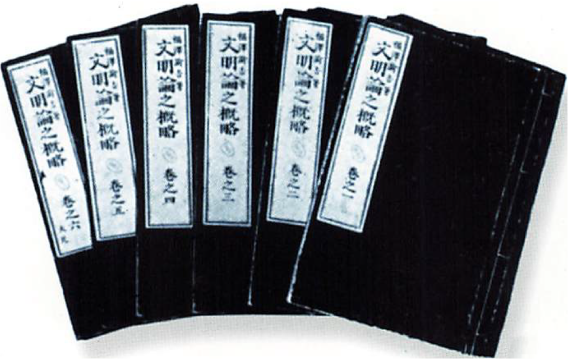
______ , An Outline of the Theory of Civilization, trans. David A. Dilworth & G. Cameron Hurst, Sophia University, Tokyo, 1973.
-
______ , On Education: Selected Works, trans. Eiichi Kiyooka, University of Tokyo Press, 1985.
-
______ , On Japanese Women: Selected Works, trans. Eiichi Kiyooka, University of Tokyo Press, 1988.
-
______ , The National Diet, Circumstances behind its Birth (Nippon Kokkai Engi). trans. Eiichi Kiyooka.
-
Fukuzawa Yukichi Nenkan, vol. 14, Fukuzawa Yukichi Kyokai, Keio University, Tokyo, 1987.
-
______ , On Departure from Asia (Datsuaron), trans. Sinh Vinh, Fukuzawa Yukichi Nenkan, vol. 11, Fukuzawa Yukichi Kyokai, Keio University, Tokyo, 1984.
-
Gibb, H. A. R. & Bowen, H., Islamic Society and the West, vol. 1, 2 parts, London, 1950–1957.
-
Hanotaux, G., Histoire de la Nation Egyptienne, vol. 6, Paris, 1938.
-
Heyworth-Dunne, J., Introduction to the History of Education in Modern Egypt, London, 1939.
-
Hirschmeier, Johannes, The Origins of Entrepreneurship in Meiji Japan, Harvard University Press, 1964.
-
Hourani, Albert, Arabic Thought in the Liberal Age, 1798–1939, Oxford University Press, 1962.
-
Ike, Nobutaka, The Beginnings of Political Democracy in Japan, Baltimore, Johns Hopkins Press, 1950.
-
Irokawa Daikichi, The Culture of the Meiji Period, trans. ed. Marius B. Jansen, Princeton University Press, 1985.
-
Issawi, Charles, Egypt at Mid-Century, London, 1954.
-
Lockwood, W. W., The Economic Development of Japan, Growth and Structural Change, 1868–1938, Princeton University Press, 1969.
-
Marshall, B. K., Capitalism and Nationalism in prewar Japan, The Ideology of Business Elite 1868–1941, Stanford University Press, 1967.
-
Maruyama Masao, Thought and Behaviour in Modern Japanese Politics, ed. Ivan Morris, New York, 1963.
-
Kosaka Masaaki, ed., Japanese Thought in the Meiji Era, trans. David Abosch, The Toyo Bunko, Tokyo, 1969.
-
Nakamura, H., Ways of Thinking of Eastern Peoples, Hawaii, 1964.
-
Nishikawa Shunsaku, The Historical Legacy in Modern Japan, Competition, Paper Currency, and Benevolence, The Japan Foundation Newsletter, vol. XVI, no. 1, July 1988.
-
______ , Profiles of Educators: Fukuzawa Yukichi (1835–1901). Unpublished article written for UNESCO Magazine, 1990.
-
Oxford, Wayne H., The Speeches of Fukuzawa Yukichi: A Translation and Critical Study, The Kokuseido Press, Tokyo, 1973.
-
Reischauer, E. O., Japan Past and Present, 3rd ed., New York, 1967.
-
Rivlin, H. A. B., The Agricultural policy of Muhammad Ali, Cambridge Mass., 1961.
-
Safran, Nadav, Egypt in Search of Political Community, Cambridge Mass., 1861.
-
Shively, Donald H., ed. Tradition and Modernization in Japanese Culture, Princeton University Press, 1971.
-
Tucker, Judith E., Women in Nineteenth-Century Egypt, Cambridge University Press, 1985.
-
Wendell, Charles, The Evolution of the Egyptian National Image: From Its Origins to Ahmad Lutfi al-Sayyid, University of California Press, 1972.